Posts

West Marin, Yes. Co-Housing, No.
Image
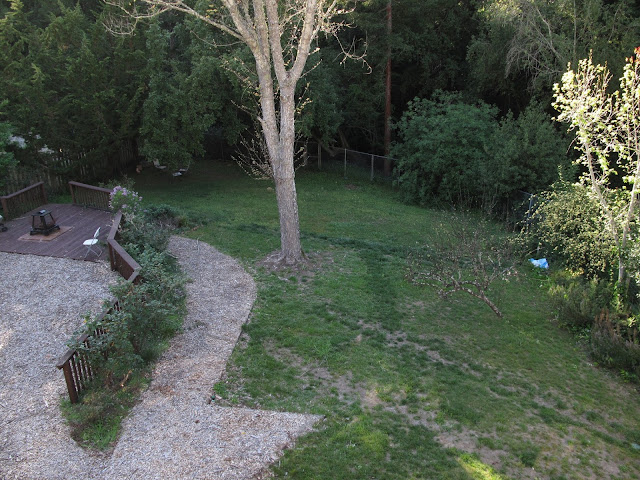
It’s been almost exactly one year to the day that we bought our house in West Marin. (Our offer was auspiciously accepted on Friday the 13 th .) After that momentous event, a few things quickly became clear: we were going to stay put in the Bay Area, which felt like a big accomplishment, but we were not going to start a neighborhood farm , which felt like a bit of a bummer. While the latter idea still felt awfully unclear, there was an excitement in the plan that quite frankly was not the same as suddenly having a hefty mortgage payment and zero savings.  But you will certainly not hear me complain.  We moved to a semi-rural area where nature abounds and the schools are innovative and we ticked off many of the boxes on the list of what we wanted. Despite being situated on a somewhat small lot, the house has opportunities for garden projects, which I’ll write about as I go. But for now, the main reason that any of this seems relevant, is that the whole reason we end...
What Happened in 2016? Part 2: Urban Farmer Workshop, Free Backyard, and Gabriel Farm

Image
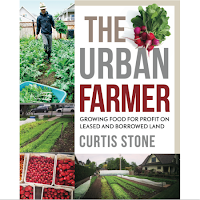
After attending the Eco-Farm Conference, I continued on my quest for ideas and possible answers about where to go next. Luckily, my time off from teaching in January coincides with other folks' time off from farming, so I signed up for yet another workshop, this time with Curtis Stone of Green City Acres , who was away from his urban farm plots in British Colombia and on book tour, promoting The Urban Farmer, Growing Food for Profit on Leased and Borrowed Land.  Stone’s premise is that quite a bit of food can be produced on a small (sub)urban lot or collection of lots, and it isn’t relevant whether you own or lease the land. As it states on the back cover of the book, Stone’s approach involves, “minimizing risk and maximizing profit by using intensive production, and making a good living growing high-yield, high-value crops right in your own backyard (or someone else’s).” As someone who did not own a backyard, was reluctant to invest in land that wasn’t mine and take...

What Happened in 2016? Part 1: Where to Go From Here? Draper Farm and Eco-Farm Conference

Image
Well, here we are. It is July 2017. From all outward appearances, my forays into the world of organic, sustainable gardening and farming have gone kaput. I didn't really post anything here all last year, except a summary of the permaculture program that I completed the year prior. Tap, tap. Is this thing still on? Well friends and blog reader(s), the answer is yes! Don't be deceived by what you don't see. The truth is, I did a lot of agricultural-ish stuff in 2016, guided mostly by the question of “What and where should I do and go next?” After completing the permaculture program at RDI , I was hanging out in Selmo without a real project. We were renting and didn’t have tons of outside space, and truth be told, I was feeling tired of building gardens in places that I would leave behind . It was nice to pass them on to the next person, but I wanted to sink my teeth in more, set up water catchment, turn the plumbing into grey water, sheet mulch and plant cover crops, in...

A Year at the Regenerative Design Institite (RDI)

Image
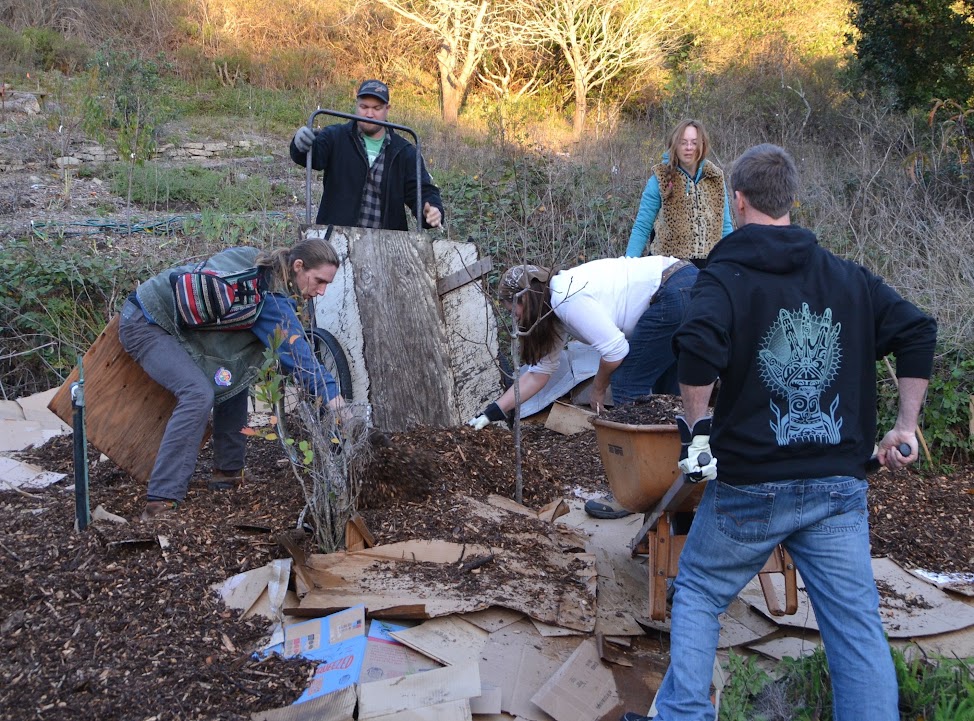
It's hard to believe that the yearlong Permaculture Design Certificate (PDC) program I signed up for at the Regenerative Design Institute has already come to an end. I initially thought I would blog about the program after each of our monthly classes, but instead, I've put together a visual overview of my year in the program, with beautiful photos from fellow classmate Kelly Stenhoff. Here are some highlights of the projects we tackled and observed over the year. Enjoy! Sheet mulching with cardboard and wood chips to suppress weeds and enrich the soil. Building a big, stinky compost pile with biodynamic treatments, led by one of our wise leaders, Lydia Neilsen. Planting cover crops from seed Sharing many delicious potluck lunches Water catchment and filtration systems Measuring on contour using a level (made out of sticks and a rock) and digging a swale, in order to... "teach water to walk." Practicing tri...

Inhabit--A Permaculture Perspective

Image
Hooray! A team of filmmakers and permaculture practitioners have just made a powerful film about permaculture. If I've ever tried to explain permaculture to you and failed, look no further for a comprehensive, beautiful rendition of how permaculture manifests in urban, suburban, and rural communities to transform natural systems and the lives of those who "inhabit" them. Here's a little taste. If you like it, you can download the full film for about $5 or search the filmmakers' website for a screening near you. There is so much wisdom that our world really needs here. Enjoy!

Planting a Spring Garden

Image
Even though I live in the Bay Area, where you can grow tons of plants and veggies year round, it's still that time of year, when folks are cleaning out old garden beds and dreaming up ideas for spring gardens. When deciding what to plant, I usually start from a basic question, like, "What do I like to eat?", or "Which plant would grow best in that shady area?", or "What would look nice over there by the fence?". These are important things to consider, but they overlook the idea that one plant can often serve many functions, beyond just food or aesthetic. One of the approaches repeatedly emphasized in permaculture is "stacking functions," or getting the most yield out of each element in a given system. In other words, getting the most bang for your buck, in this case, out of each plant. It makes a lot of sense. Why not plant your shrub so that it provides a wind block, builds your soil, and also attracts insects that benefit your neighbori...

The Last American Man

Image
I just finished reading this page-turner about Eustace Conway, a man who lives entirely off the land in the Appalachian Mountains of North Carolina. He takes the art of self-sustained living to the extreme, eating only food he has hunted or grown, wearing clothes that he has made out of animal skins and plant-fiber thread, and building houses from wood he has fallen on the 1,000 acres where he lives and operates his educational camp called Turtle Island . I initially picked up the book because I fall into the following dreamy category that Gilbert dispels in the first chapter:  “Eustace told me that people tended to romanticize his lifestyle. Because when people first ask him what he does for a living, he invariably replies, 'I live in the woods.' Then people get all dreamy and say, 'Ah! The woods! The woods! I love the woods!' as if Eustace spends his day sipping the dew off clover blossoms. But that’s not what living in the woods means to Eustace ...